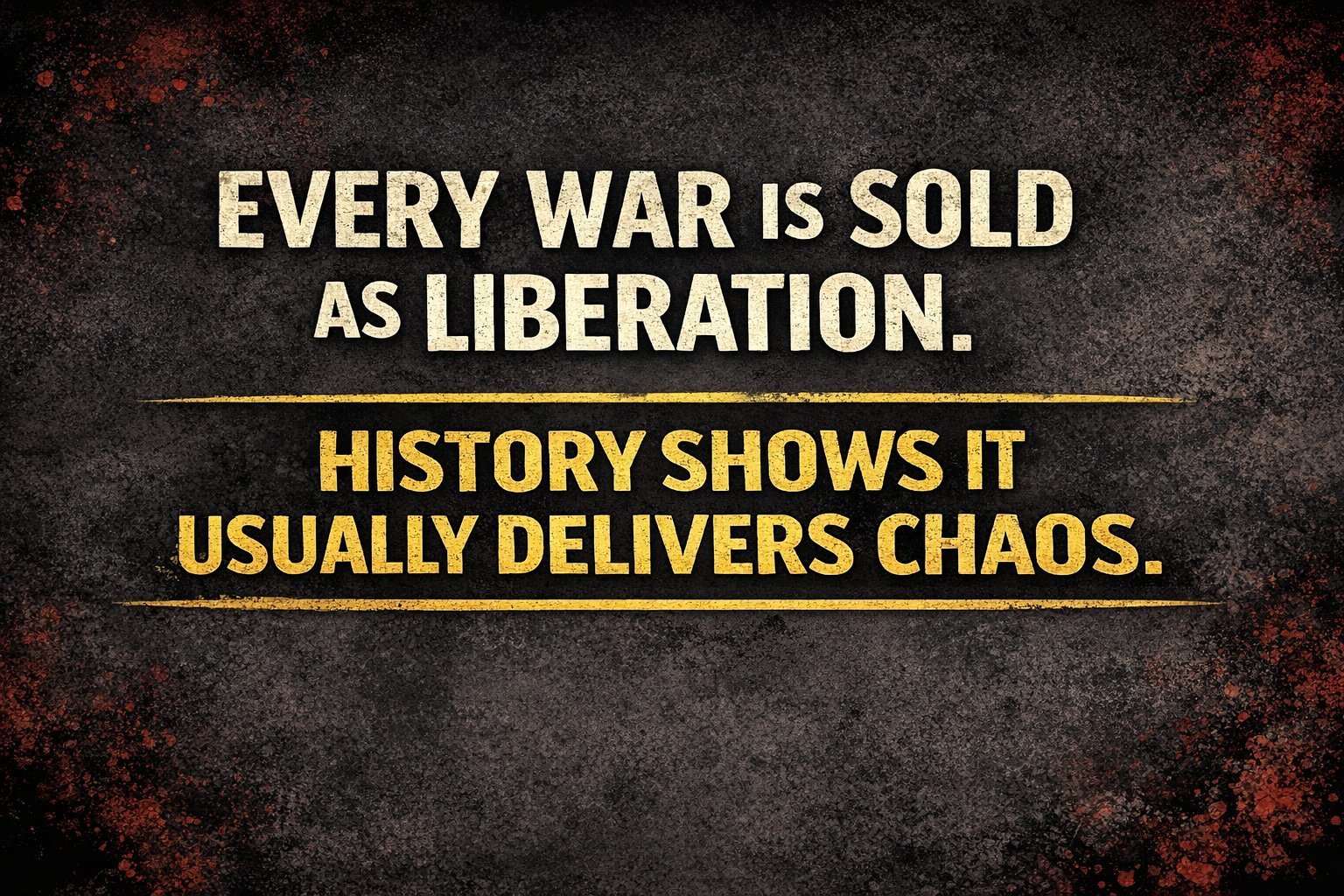
From WWI to Iraq, the same pattern repeats: fear is manufactured, war is sold as liberation, and the bill goes to working people — while the profits go to a very small club. The names and corporations that have done this are documented. Primary sources only.
"War is a racket. It always has been. It is possibly the oldest, easily the most profitable, surely the most vicious."— Maj. Gen. Smedley D. Butler, USMC · Two-time Medal of Honor recipient · War Is a Racket, 1935
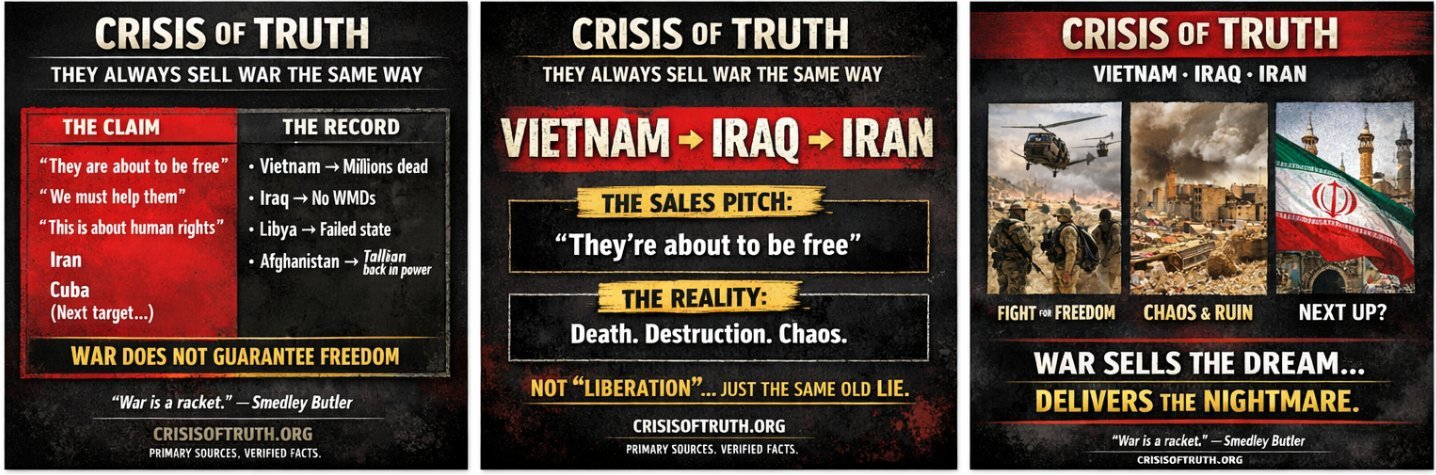
From WWI to Vietnam to Iraq to the drumbeat on Iran, the script doesn't change. The targets change. The faces change. The money flows the same direction.
The sales pitch. The record. The same outcome.
One hundred years of evidence.
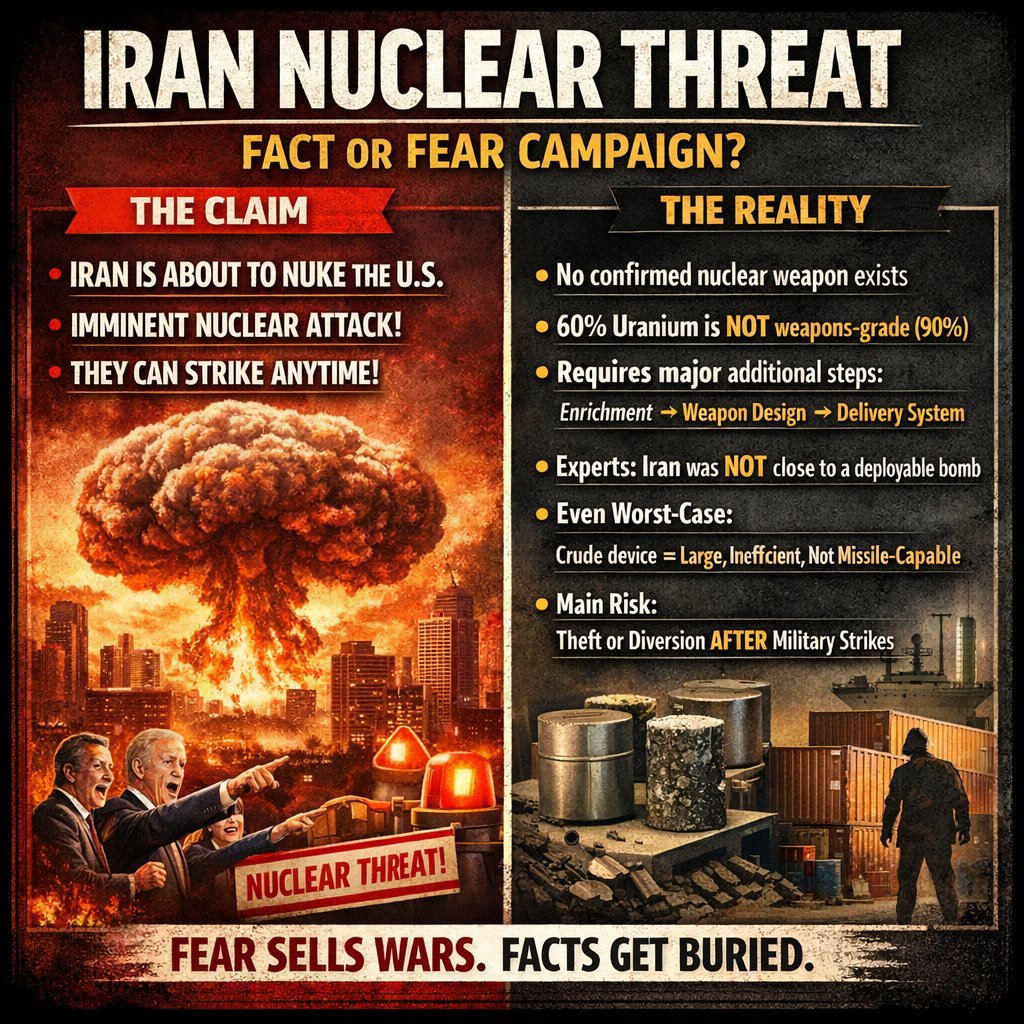
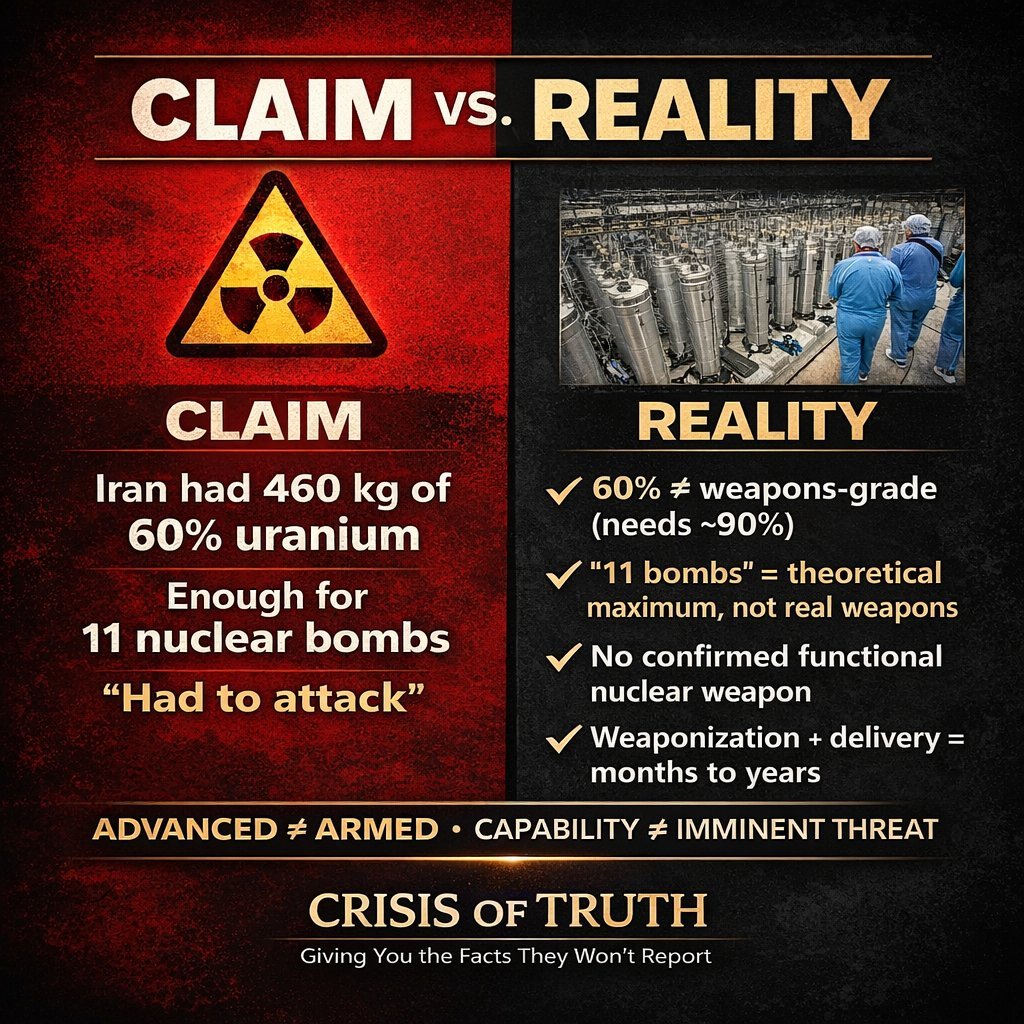
The current fear campaign — fact-checked.
Used by Wilson in 1917. Used by Bush in 2003. Watch for it now.
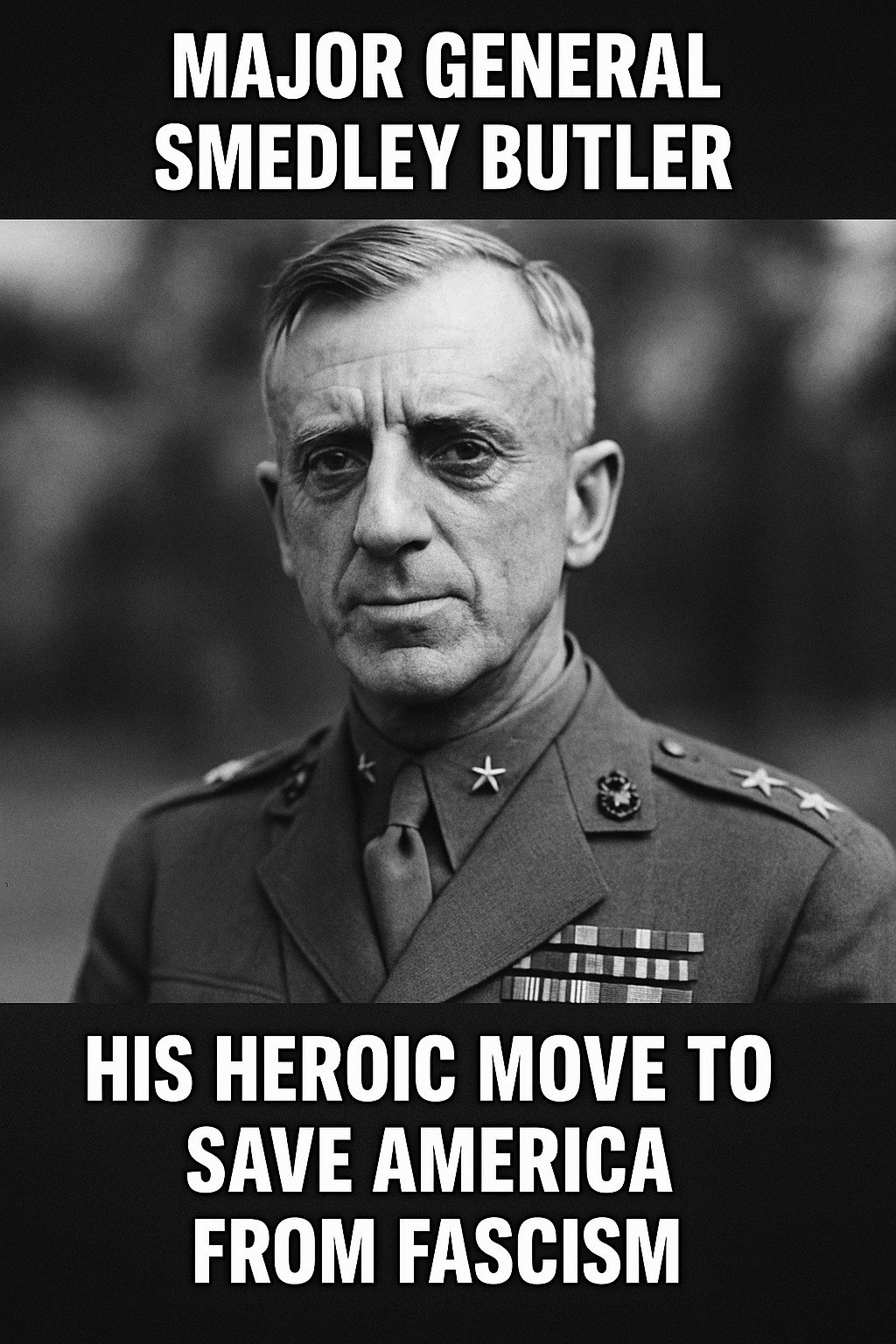
The most decorated Marine in American history turned against the machine he served. His short book remains the most direct indictment of war profiteering ever written by someone who was inside the system.
Get the Book →Smedley Butler wasn't a pacifist professor or a left-wing activist. He was America's most decorated military officer — the only person to receive two Medals of Honor for separate actions. He commanded troops in the Philippines, China, Haiti, Nicaragua, and Mexico. He had more combat experience than almost any living American when he published War Is a Racket in 1935.
And he concluded that almost every war he fought in was conducted primarily to make rich people richer.
"I spent 33 years and four months in active military service... And during that period, I spent most of my time being a high class muscle man for Big Business, for Wall Street, and for the Bankers. In short, I was a racketeer, a gangster for capitalism."
— Smedley Butler, War Is a Racket, 1935Butler documented how companies and corporations increased their profits during World War I by up to 1,700 percent. He calculated that of the $52 billion the government spent on WWI, roughly $16 billion was extracted as profit — not by soldiers, but by bankers, industrialists, and war suppliers.
His conclusion was simple: the people who send men to die almost never send their own sons. The people who profit from war almost never serve in one. The pattern, Butler argued, was not an accident — it was by design.
Butler was so credible that when a group of wealthy American businessmen allegedly plotted to overthrow FDR in 1934 — the so-called Business Plot — they chose him to lead the coup. Butler went to Congress instead and exposed them. U.S. House Special Committee on Un-American Activities, 1934
The propaganda playbook used in WWI was refined, updated, and used again for Iraq. The techniques are identical. Watch how it was done — then watch it being done again.
Wilson's Committee on Public Information deployed 75,000 "Four Minute Men" across America, flooded newspapers with government-written articles, and pioneered modern propaganda — all while lenders and industrialists collected billions.
The neoconservatives saw 9/11 as an opportunity. They manufactured the WMD case, manipulated intelligence, ignored dissent — and handed reconstruction contracts to connected firms before the first bomb fell.
These aren't conspiracy theories. These are documented facts from U.S. government records, congressional investigations, court documents, and reporting by major news organizations. Every entry below is sourced.
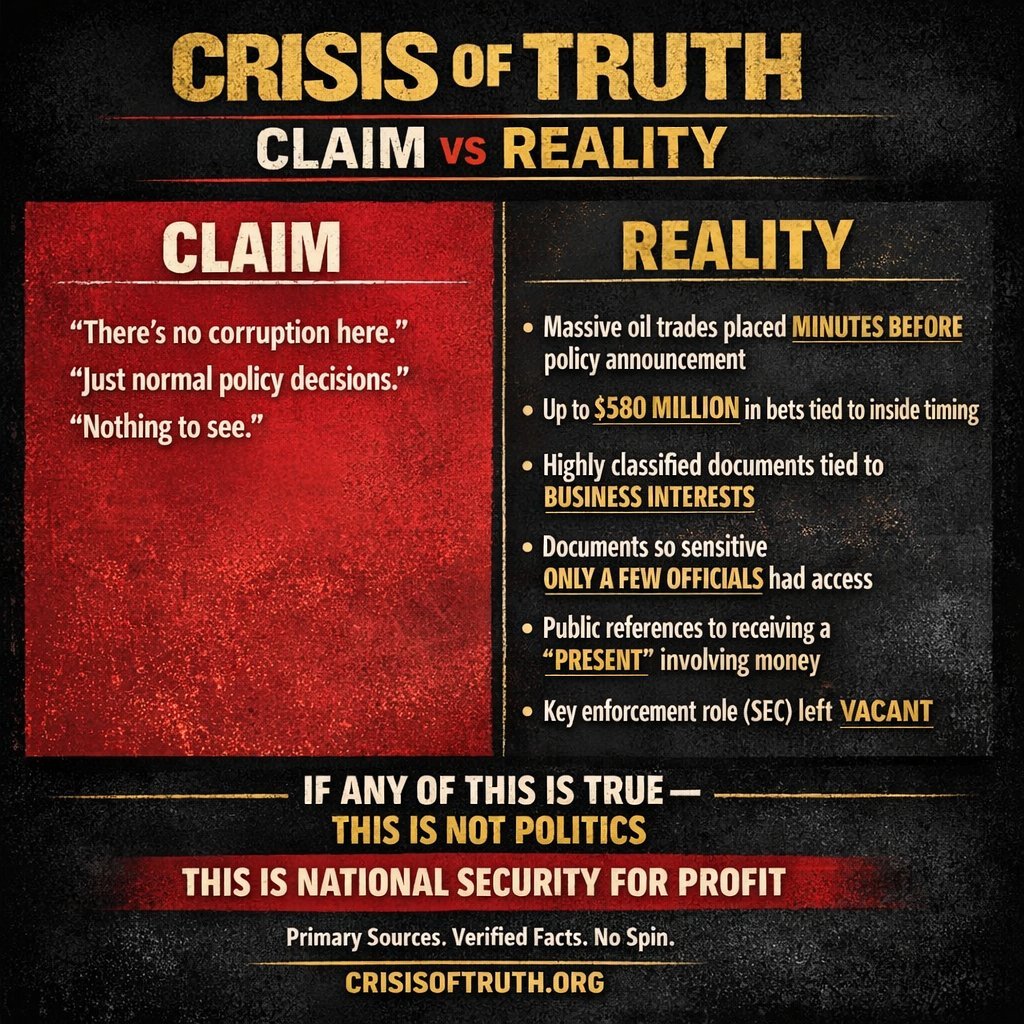
This is what a manufactured war looks like when the documents finally come out. Every claim below was made publicly, on television, under oath. Every reality comes from official government investigations and reports.
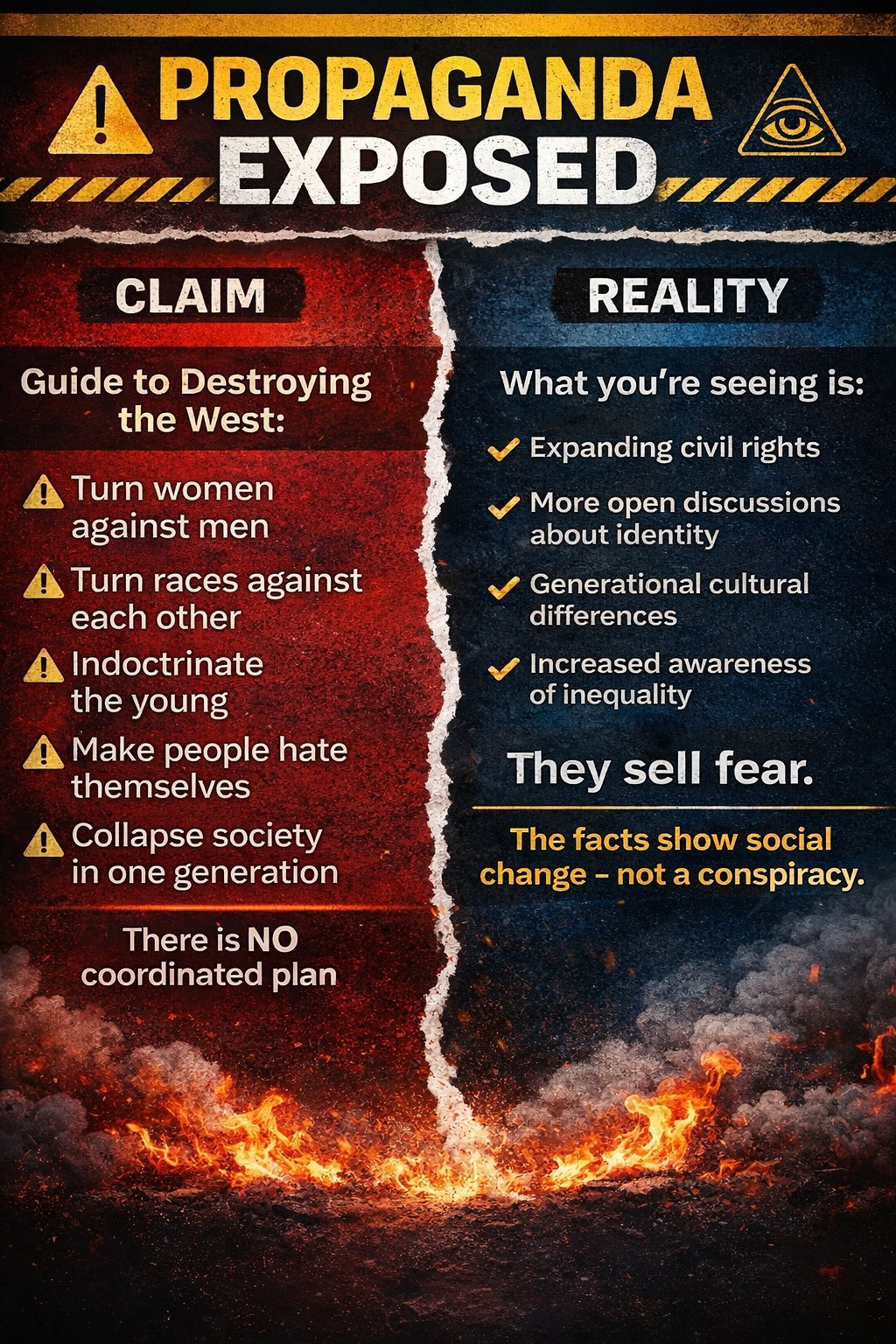
The same fear-selling for Iran — fact-checked with primary sources.
The revolving door between power and profit.
WWI gave us the modern war propaganda template. Nazi Germany studied it. Every administration since has used it. Understanding the mechanics is the first defense against it.
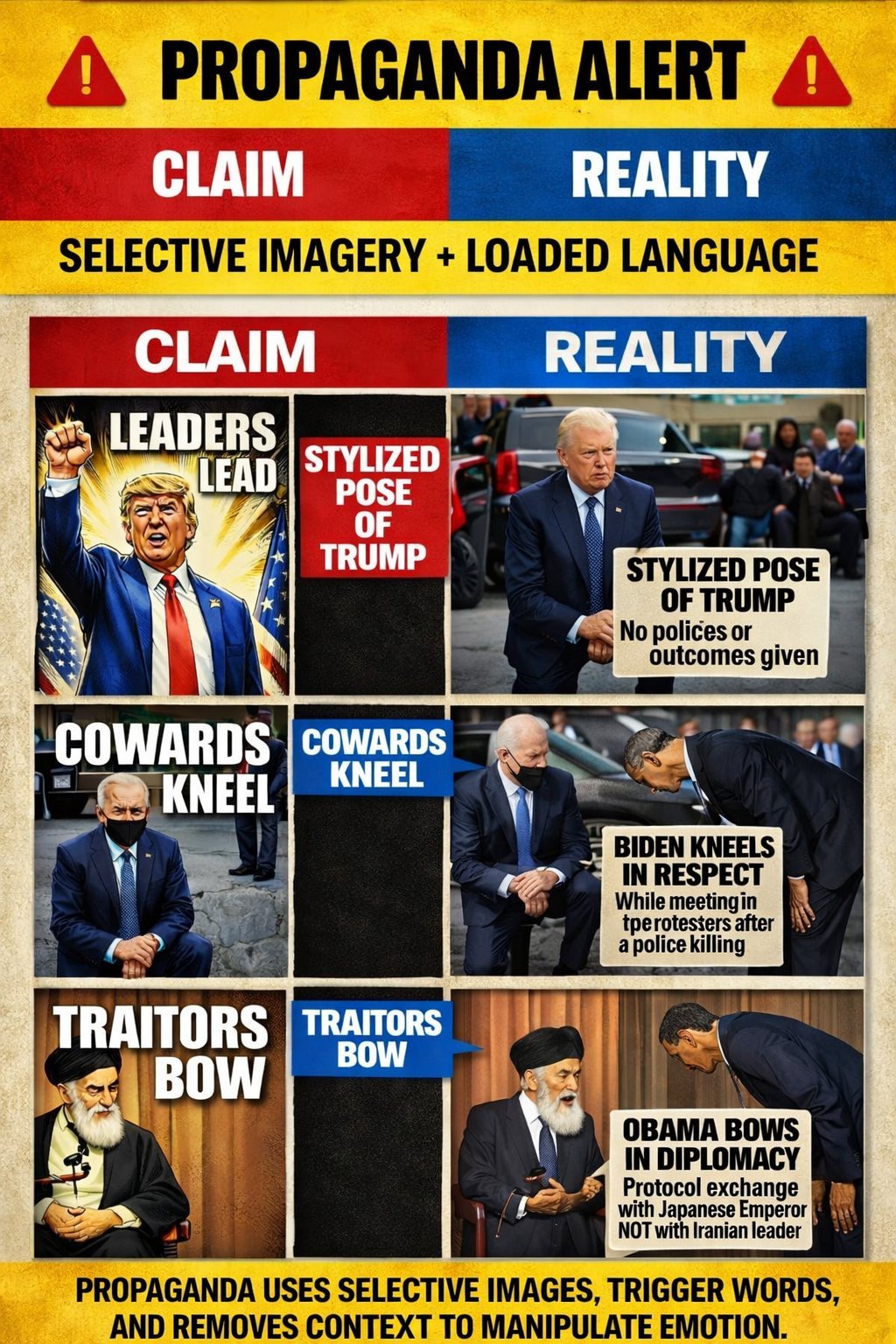
Propaganda works by removing context. Here's the context.
Fear is the product. You are the market.
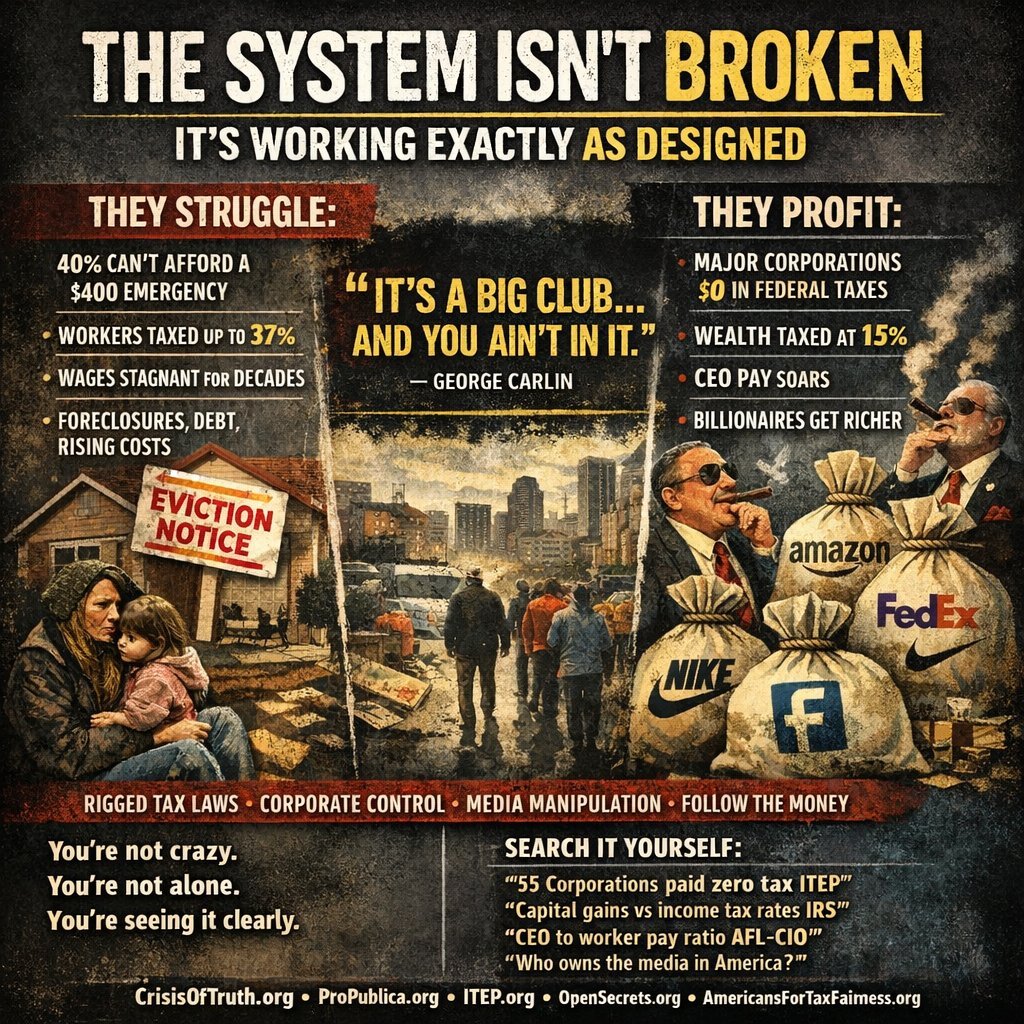
War has two ledgers. One is kept in mahogany boardrooms. The other is kept in military cemeteries and VA waiting rooms. The people who decide wars rarely serve in them. The people who fight them rarely profit from them.
The two economies: theirs and ours.
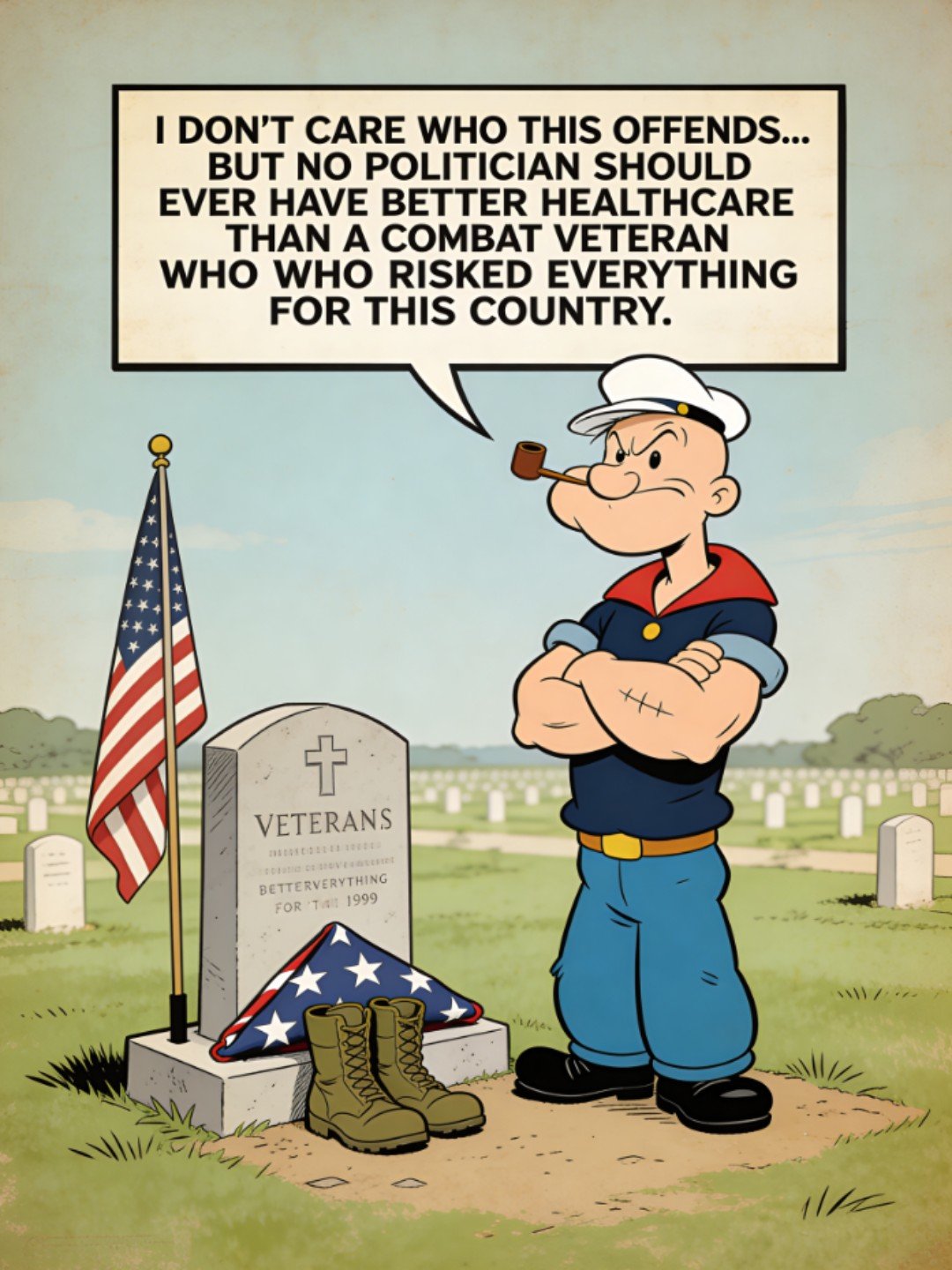
"No politician should ever have better healthcare than a combat veteran who risked everything for this country."
— A sentiment held by tens of millions of Americans, across party linesThe post-9/11 wars cost $8 trillion. Nearly 900,000 people died in direct conflict. 38 million were displaced. And when the last veteran came home, the VA was underfunded, the wait lists were years long, and Halliburton was building its new headquarters.
Butler wrote it in 1935: the profits of war go to a handful of corporations and investors. The costs — in lives, in debt, in broken bodies — are distributed across millions of working families who had no vote in the decision.
That arrangement has not changed. The names have changed. The number of zeros has changed. The arrangement has not.
The same techniques that sold WWI are being used today. They work because most people never learned to recognize them. Here's what to look for.
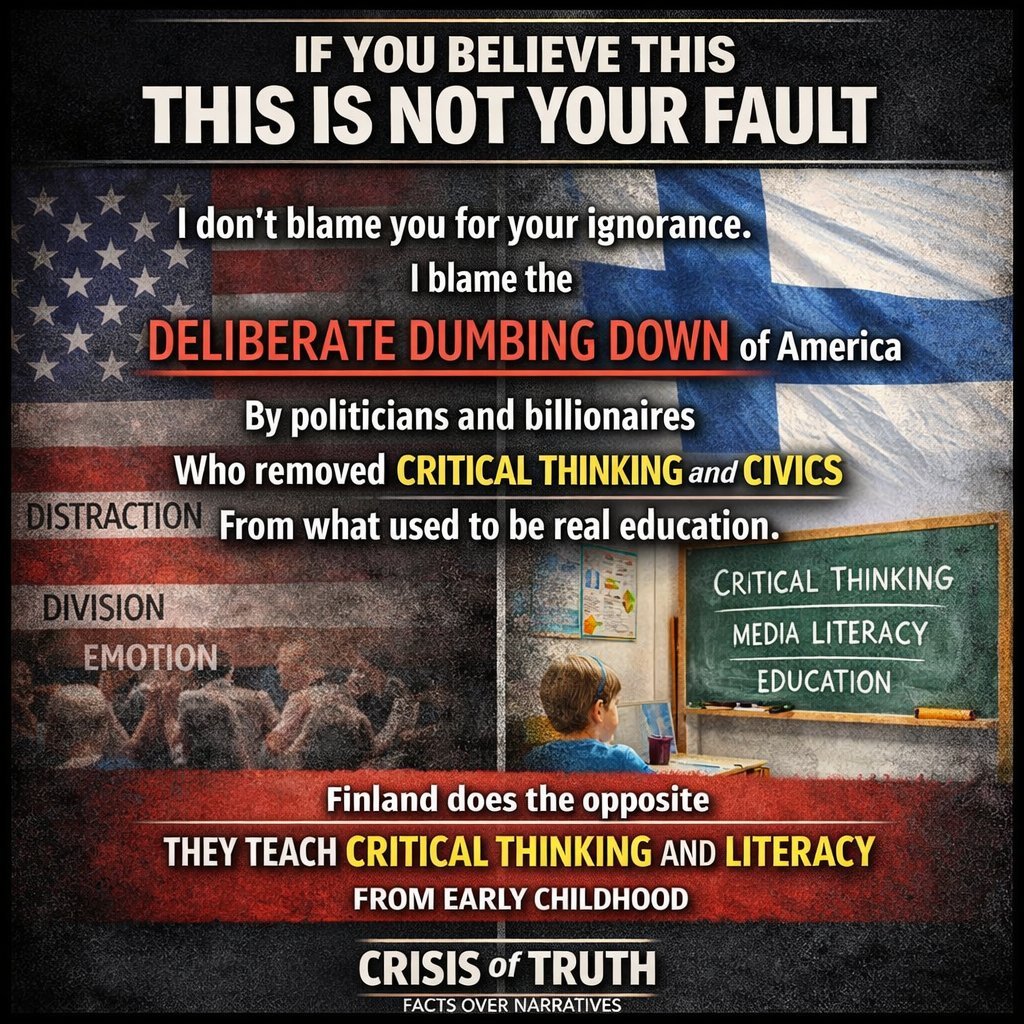
Critical thinking was removed from education deliberately.
Know the playbook. See it in real time.
When you hear words like "imminent threat," "weapons of mass destruction," "they hate our freedom," or "we must act now before it's too late" — those are the four phrases that sold every major American war of the last century. Ask: who profits if this war happens? Who is funding the voices calling for it? What do the primary intelligence documents actually say — not the summary, the actual documents?
Before you decide how you feel about the next war they're selling, ask yourself one question: whose kids go? The ones demanding the war, or yours?
Of the 535 members of Congress who voted to authorize the Iraq War, fewer than 10 had children serving in the military. The people who send soldiers to war almost never send their own families. That is not an accident. That is a system.
"No politician should ever have better healthcare than a combat veteran who risked everything for this country."
— A sentiment held by tens of millions of Americans, across every political lineThis documentary argues — with named people, named companies, and documented financial records — that modern history is not driven by chance or ideology. It is driven by whoever profits. You do not have to accept every conclusion. You do have to acknowledge the documented facts it presents.
A comprehensive look at who profits from war, debt, and political instability — from WWII through JFK through 9/11. Over 28 million views. Make up your own mind — but check the primary sources below before you dismiss it.
You do not have to accept every conclusion blindly.
You do have to acknowledge documented facts.
Check the sources. Follow the money. Confirm the facts.